Synchronous vs Asynchronous JavaScript
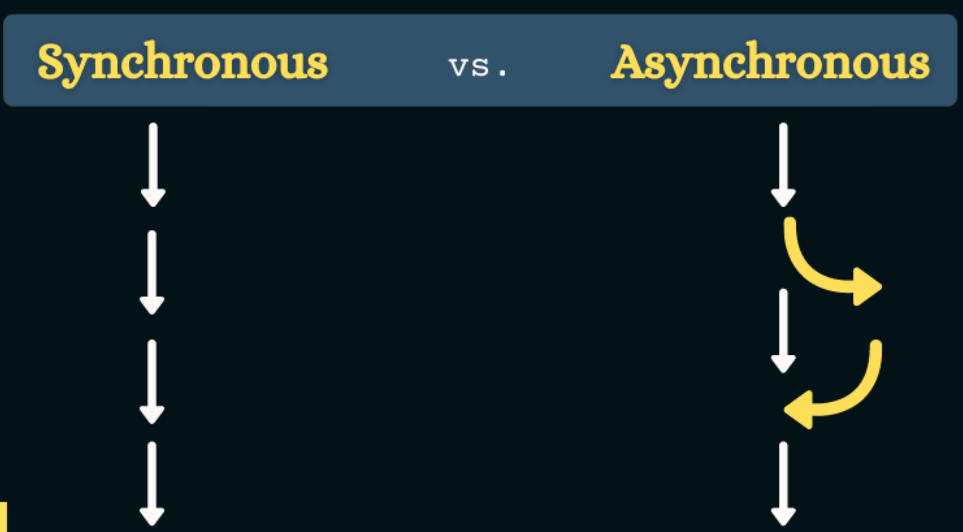
- JavaScript Functions are First-Class Citizens. you can create and modify a function, use it as an argument, return it from another function, and assign it to a variable.
- We can classify most asynchronous JavaScript operations with two primary triggers:
- Browser API/Web Api event or functions (
setTimeout,onclicketc..) - Promises. unique JS object that allows us to perform asynchronous operations.
- Browser API/Web Api event or functions (
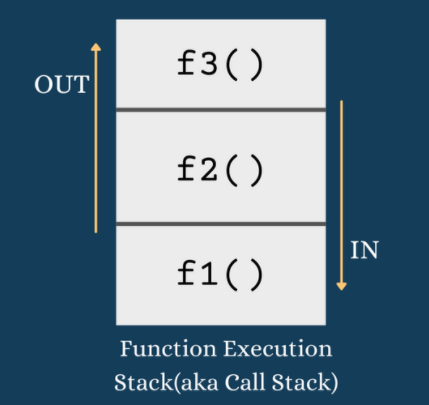
Synchronous JavaScript - How Function Execution Stack works
Section titled “Synchronous JavaScript - How Function Execution Stack works”- refer to AsyncSync.js for example.
How JavaScript Callback Queue works (aka Task Queue)
Section titled “How JavaScript Callback Queue works (aka Task Queue)”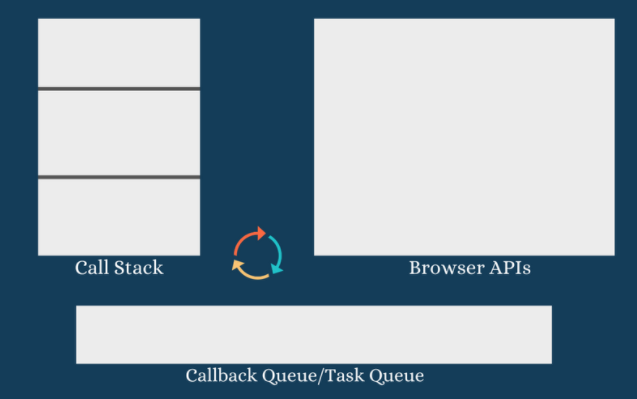
The famous Event Loop
- The engine creates a
loopto look into the queue periodically to find what it needs to pull from there.- It pulls a callback function from the queue to the call stack when the stack is empty.
- When Browser API (async stuffs) occur, park the callback functions in a queue.
- Keep executing code as usual in the stack.
- The event loop checks if there is a callback function in the queue.
- If so, pull callback function from the queue to the stack and execute.
- continue loop.
Synchronous
Stops execution of further code until this is done. Because it this stoppage of further execution, synchronous code is called ‘blocking’. Blocking in the sense that no other code will be executed.
Asynchronous
Execution of this is deferred to the event loop, this is a construct in a JS virtual machine which executes asynchronous functions (after the stack of synchronous functions is empty). Asynchronous code is called non blocking because it doesn’t block further code from running.